



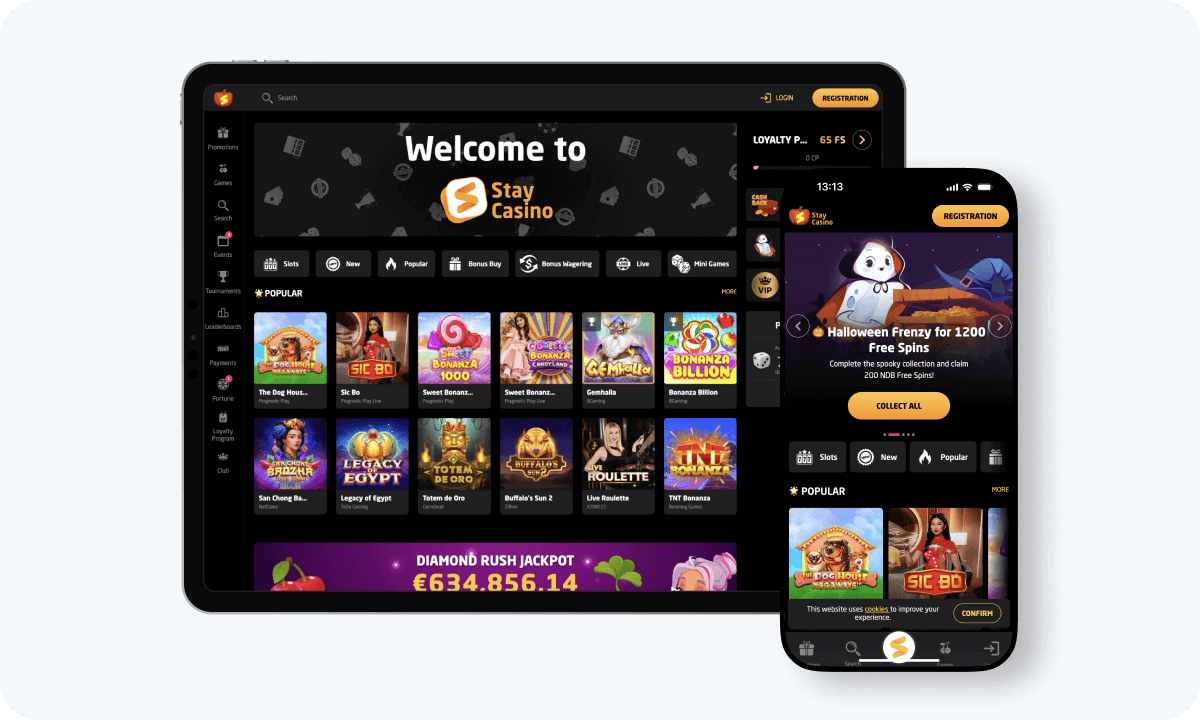
Online gambling controls are most useful when they are chosen before play becomes difficult to manage. For Australians considering the stay casino app download, the practical question is not simply whether a mobile page is convenient, but whether available account controls fit a personal spending and time plan. The published material describes deposit, loss, wager and session limits, cooling-off, self-exclusion and account closure. However, the service is not Australian-licensed, and its availability does not establish permission to offer online casino games in Australia.
Start with the limit that matches your risk
Different limits address different behaviours. A deposit limit restricts how much money can be added during a chosen period, while a loss limit focuses on the amount that may be lost. A wager limit concerns total stakes, which can be much higher than deposits when funds are repeatedly recycled. A session limit instead deals with time spent playing. Choosing the wrong control can create a false sense of security, so consider which behaviour you are actually trying to contain.
For example, someone who tends to keep depositing after losing may benefit most from a strict deposit limit, whereas a person who plays rapidly for long periods may need a session restriction. A loss limit can be useful where the concern is the final financial result rather than the amount deposited. If more than one pattern applies, using several controls together may be more sensible than relying on a single setting.
Set limits at an amount that remains affordable if the entire sum is lost. Do not treat a limit as a target or as money that is safe to spend. Record the chosen amount, period and purpose before activating it, then review whether the control is genuinely reducing risk. If you are borrowing, hiding gambling, missing essential payments or chasing losses, a limit alone is unlikely to be enough; stop gambling and seek independent support.
How to use cooling-off before a longer break
Cooling-off is designed for a temporary pause rather than a permanent decision. The published information describes periods from one day to six months. A short period can help interrupt an impulsive routine, while a longer period may be appropriate after an unusually large loss, repeated attempts to recover money or difficulty sticking to ordinary limits.
Think of cooling-off as a period in which gambling and deposits are restricted. It should not be treated as a convenient way to wait until an attractive promotion appears. Before requesting it, withdraw attention from gambling-related messages, remove saved payment details where possible and tell a trusted person what you have decided. These steps reduce the chance that a moment of stress will reverse the decision.
Cooling-off requests are described as being made through live chat. Ask the support team to confirm the selected duration and when the restriction begins. Keep a record of the request and any confirmation. If the control does not appear to operate as expected, do not continue testing the account; retain the evidence and seek assistance. A cooling-off period is most effective when it is treated as a firm boundary, not a negotiation.
When self-exclusion is the more appropriate choice
Self-exclusion is a stronger measure for people who want to stop gambling for a defined period. The available information refers to six- to twelve-month exclusions, during which gambling and deposits are restricted and promotional messages are stopped. This is materially different from lowering a limit: self-exclusion removes the need to make repeated decisions during a vulnerable period.

Consider self-exclusion if you have repeatedly exceeded limits, reopened gambling soon after a break, chased losses or found yourself gambling despite deciding not to. It may also be appropriate if gambling is affecting sleep, relationships, work, study or household finances. Do not wait for a particular financial threshold or dramatic event. The pattern of behaviour is more relevant than the size of any single loss.
The published process says that self-exclusion is requested through live chat. Ask for the restriction in clear terms and request written confirmation of its start date and duration. Be aware that account restrictions and unfinished withdrawals can involve separate processes, so keep records of both. For broader assistance, Gambling Help Online support and information offers an Australian public resource for people affected by gambling, as well as concerned family members and friends.
What account closure can and cannot solve
Permanent closure is the strongest account-level action described in the available material. It requires contacting customer support rather than simply abandoning the account. Closure can remove access to that particular service, but it is not a complete treatment for gambling harm. A person who closes one account may still be exposed to other gambling services, advertising or financial triggers.
Before requesting closure, consider practical matters such as outstanding withdrawals, pending verification and any personal records you may need. The decision should not be delayed indefinitely while waiting for a promotional result or attempting to recover losses. Ask support to explain the closure process, but avoid reopening access merely to check an unresolved matter unless there is a compelling practical reason.
After closure, strengthen the boundary outside the account. Block gambling advertising where tools are available, remove gambling apps and bookmarks, ask your bank whether gambling transaction blocks or spending controls are offered, and let a trusted person know. Review bills and automatic payments so essential expenses are protected. If urges remain strong, professional support is more reliable than repeatedly changing account settings.
Check the Australian position before using any control
Account tools do not turn an offshore gambling service into an Australian-approved operator. The source material states that the service is associated with offshore licensing and is not Australian-licensed. It also notes that Australia’s Interactive Gambling Act prohibits operators from offering online casino games to people in Australia. An offshore licence therefore should not be read as Australian approval, consumer protection or a guarantee that a service may legally provide casino play locally.
This distinction matters when assessing responsible gambling measures. A limit, cooling-off request or self-exclusion feature may be described by an operator, but Australian users should not assume that the control has the same status, enforcement pathway or protection as a scheme administered under Australian regulation. Availability of an Australian-dollar balance or English-language support also does not establish local authorisation.
Before taking any action, check the current Australian legal and consumer-protection position independently, particularly if you are already experiencing harm. Do not rely on a mobile interface, a browser shortcut or an app-style icon as evidence of legitimacy. If you have deposited money, preserve account correspondence and transaction records. Most importantly, responsible gambling tools should support a decision to reduce or stop gambling, not justify continuing beyond what you can safely afford.
Questions about limits, breaks and exclusion
Are deposit limits enough to prevent gambling harm?
No. Deposit limits can restrict money added to an account, but they may not address time spent playing, repeated wagering or attempts to recover losses. A combination of limits, a cooling-off period or self-exclusion may be more appropriate. Anyone experiencing financial or emotional harm should seek independent support rather than relying only on account settings.
Can a cooling-off period be changed once it begins?
The published material describes cooling-off as a selected restriction lasting from one day to six months, but it does not establish that every period can be shortened or changed. Treat the request as binding and ask support to confirm its terms before activation. Do not assume that contacting support will restore access early.
Is account closure the same as self-exclusion?
Not necessarily. Self-exclusion is a defined gambling restriction for a stated period, while account closure is a broader request to close the account permanently. The available information says both involve support contact, but their procedures may differ. Ask for the action you specifically want and obtain confirmation rather than relying on an informal request.